
Studying long hours doesn’t always guarantee top marks. What truly makes a difference is studying smart — using proven methods that help you learn faster, remember longer, and stay focused.
In this guide, you’ll discover study smarter tips for students, practical strategies, and memory techniques to boost focus and achieve exam success. For more helpful guides, visit our Education category.
Why Study Smarter Beats Studying Hard: Tips for Students
Many students think that longer study hours equal better results. But the reality is different:
- Quality over quantity matters
- Focus beats long hours
- Active learning is more effective than passive reading
By learning how to study smarter, you can save time, reduce stress, and achieve better results without overworking.
Example: A student who studies 2 hours a day using active recall and spaced repetition retains more than someone studying 6 hours passively.
Benefit: Adopting smart study habits improves understanding, retention, and exam performance.
1. Set Clear Study Goals for Maximum Focus
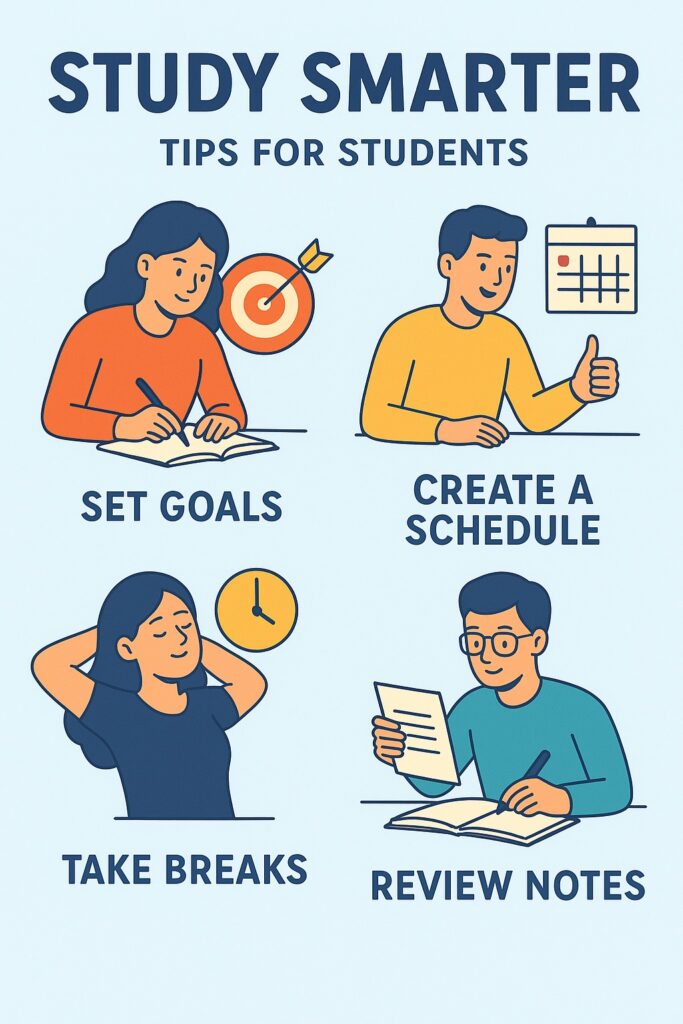
Before opening your books, set small, achievable goals for each session.
Examples:
- “I will finish Chapter 2: Photosynthesis.”
- “I will revise 20 formulas today.”
- “I will solve 10 math problems.”
Clear goals help you stay focused, track progress, and feel accomplished. Clear goals help you stay focused, track progress, and feel accomplished. This is one of the most effective smart learning strategies for students.
Pro Tip: Write your goals in a planner or sticky notes. Checking off each goal boosts motivation and gives a sense of achievement. For more strategies, visit our How to study smarter to succeed in any field.
2. How to Study Smarter Using the Pomodoro Technique
The Pomodoro Technique divides study time into short, concentrated intervals.
How it works:
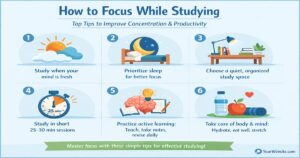
- Study for 25–50 minutes
- Take a 5–10 minute break
- After 4 cycles, take a 15–20 minute long break
Why it works: Short sessions prevent burnout and help your brain retain information more efficiently.
Extra Tip: During breaks, stretch or walk. Avoid scrolling on your phone — it reduces focus in the next session.
Example: A student struggling with history uses 30-minute Pomodoro cycles with active recall to memorize key dates, improving retention in just a week.
3. Take Notes in Your Own Words to Study Smarter
Writing notes in your own words helps you understand and retain information longer.
Good notes include:
- Key points and definitions
- Important formulas
- Diagrams and charts
- Short summaries in simple language
Tip: Use highlighters or colors to mark important points — visual cues enhance memory retention.
Benefit: Personal notes make revision faster and reduce the need to reread entire chapters.
4. Active Recall: A Proven Memory Technique
Active recall forces your brain to retrieve information, strengthening long-term memory.
How to practice:
- Explain topics aloud without notes
- Write what you remember
- Solve practice questions from memory
Example: Teach a concept like photosynthesis to a friend. It highlights gaps and reinforces learning.
For more memory strategies, check out our Education guides.
Benefit: Using active recall increases retention by up to 50% compared to passive reading.
5. Teach Someone Else to Reinforce Learning
Teaching is a simple yet powerful way to study smarter.
Explain a topic to:
- A friend
- A sibling
- Yourself in front of a mirror
Extra Tip: Record your explanation and play it back to reinforce knowledge.
Example: Explaining algebra formulas to a sibling helped one student identify weak areas and improved test scores in a week.
6. Spaced Repetition: Remember What You Learn
Instead of cramming, revise topics at intervals:
- Day 1: Learn topic
- Day 3: Revision 1
- Day 7: Revision 2
- Day 14: Revision 3
Apps like Anki or Quizlet make spaced repetition easier.
Benefit: Spaced repetition ensures long-term retention and reduces exam anxiety.
For more digital study tips, explore our Good study habit.
7. Build a Practical Study Routine to Study Smarter
Consistency is key. A simple daily plan could be:
- Morning: Difficult subjects
- Afternoon: Practice problems
- Evening: Revise notes
- Night: Quick recap
Even 2–3 focused hours daily is better than 6 hours of distracted studying.
Example: Start with challenging subjects in the morning when your brain is fresh for optimal focus.
Benefit: A structured routine reduces procrastination and improves learning efficiency.
8. Reduce Distractions to Improve Focus
Your environment greatly affects study efficiency.
Avoid:
- Phone notifications
- Social media
- TV or background noise
Keep:
- Books, notes, stationery
- Water bottle
- Simple to-do list
Apps like Forest or Focus@Will help block distractions and improve concentration.
Benefit: Reduced distractions lead to higher retention and faster learning.
9. Take Care of Your Body and Mind
Good health supports a sharp mind:
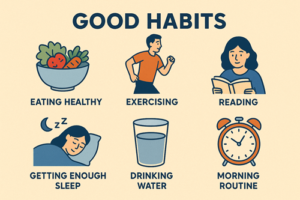
- Sleep: 7–8 hours/night
- Nutrition: Fruits, vegetables, nuts
- Hydration: Drink enough water
- Exercise: 20 min of walking improves focus
Benefit: A well-rested and healthy mind retains information better and performs optimally in exams.
10. Exam Success Tips for Students
- Start preparation early
- Solve past question papers
- Practice writing answers
- Take mock tests
- Revise summaries regularly
Following these effective study methods for students reduces stress and improves performance.
Example: A student practicing past papers daily noticed improved accuracy and speed in exams within 2 weeks.
11. Use Mind Maps for Visual Learning
Mind maps help organize and visualize concepts:
- Draw a central idea
- Branch out key points and subtopics
- Use colors, symbols, and keywords
Benefit: Visual learning enhances memory retention and makes revision faster.
For more study techniques, Read Our Guidance Path.
12. Use Study Apps and Tools Wisely
Technology can enhance learning if used correctly:
- Quizlet: Flashcards, active recall
- Anki: Spaced repetition
- Notion / Evernote: Organize notes digitally
- Focus apps: Forest, Focus@Will
Benefit: Using apps strategically makes study sessions more efficient and effective.
Common Mistakes Students Should Avoid
- Studying only before exams
- Memorizing without understanding
- Using mobile phones while studying
- Skipping revision
- Comparing yourself with others
Avoiding these mistakes helps you study smarter and retain information effectively.
Master These Study Smarter Tips for Students
By applying these practical strategies — active recall, spaced repetition, Pomodoro technique, goal-setting, mind maps, and healthy routines — students can study smarter, improve focus, and achieve exam success with less stress.
Start implementing these efficient study techniques for students today and see the difference in your learning efficiency.
- Check out the Online Learning Tools
- See this also:
Summary:
Studying effectively is not about spending endless hours with books; it’s about using smart study strategies for students to learn efficiently, retain information longer, and stay focused during exams.
Mastering practical learning techniques for students helps improve focus, retention, and exam performance without overworking.
FAQs
- What are the best study smarter tips for students?
Use active recall, spaced repetition, goal-setting, mind maps, and Pomodoro technique to improve focus and memory. - How can I improve focus for studying?
Reduce distractions, maintain a clean study space, take breaks, and study in short, focused sessions. - Which memory techniques work best for students?
Active recall, spaced repetition, note-taking, teaching others, and using mind maps are highly effective. - How many hours should I study daily?
Even 2–3 focused hours of smart studying is better than long hours of distracted study. - Do study smarter tips for students really improve results?
Yes. Following smart study methods increases understanding, retention, and exam success while reducing stress. - Can study apps really help students improve exam performance?
Yes. Apps like Quizlet, Anki, and Focus@Will support active recall, spaced repetition, and concentration, improving learning efficiency. - How can students stay motivated while studying?
Set small goals, track progress, take regular breaks, and reward yourself for completing study sessions — these habits reinforce effective learning methods for students.