
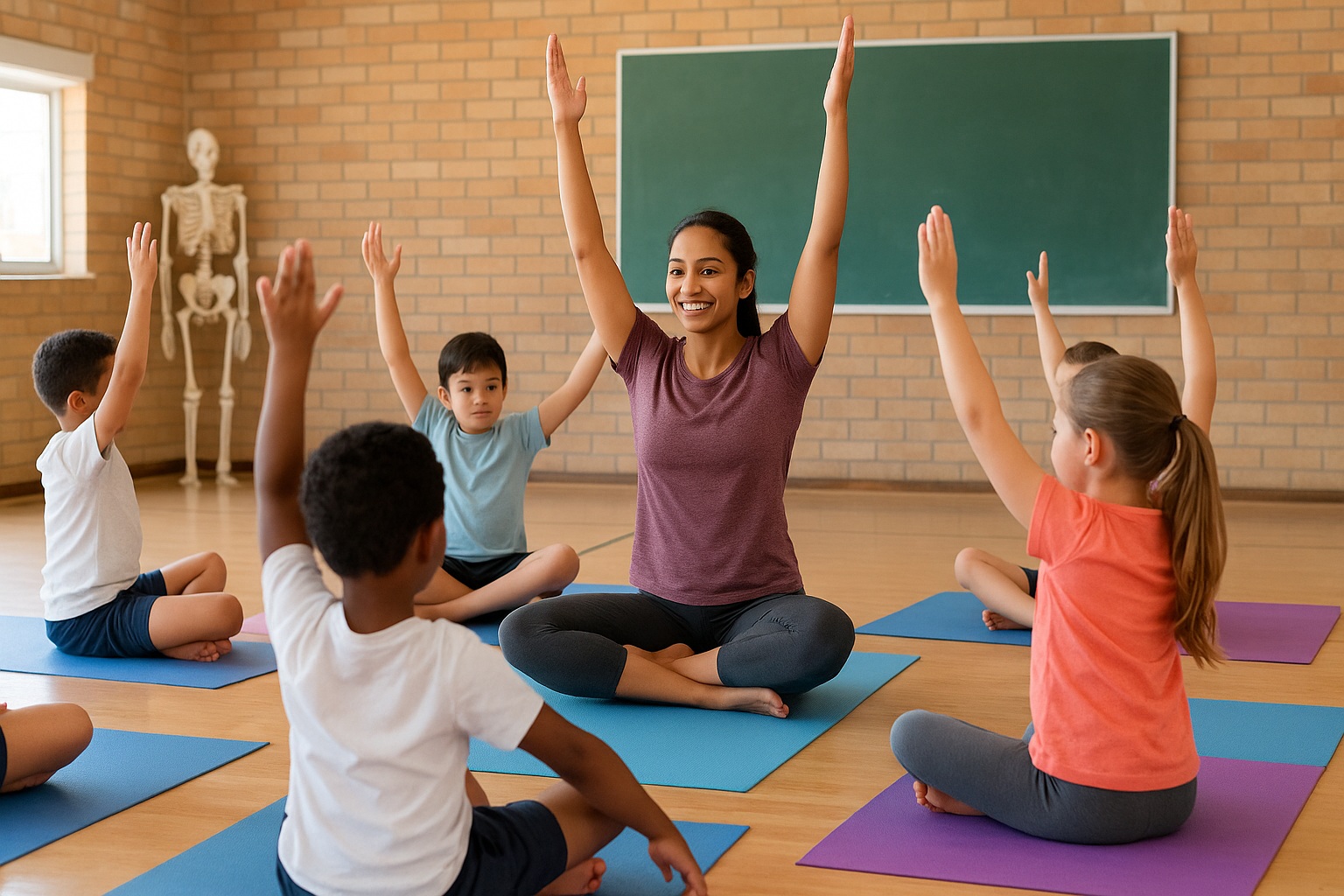
Yoga in schools is becoming an essential part of student life across India. It helps students stay healthy, focused, and emotionally balanced. While cricket, football, and basketball remain popular, Yoga quietly offers unique benefits for the mind, body, and emotions, making it a perfect addition to school sports programs.
Introducing yoga in schools into sports programs can reduce stress, improve focus and memory, boost strength and flexibility, and support faster recovery after physical activities. Practicing yoga in schools regularly also builds confidence, emotional resilience, and teamwork skills, preparing students for both academic and athletic success.
1. Yoga Helps Reduce Stress
School life can be stressful. Exams, homework, projects, and social pressure can make students anxious or restless. Yoga in schools provides a simple, natural way to calm the mind.
Techniques like deep breathing (Pranayama) and short meditation sessions help students relax. Even 10–15 minutes a day can make a noticeable difference.
💡 Quick Stress-Buster: Take 5 deep breaths before starting a study session to calm your mind instantly!
For example, a student feeling nervous before a board exam can practice deep breathing to stay calm and focused. Teachers notice that students who start their day with Yoga remain calmer, even during stressful activities like tests or competitions.
Reference: Mayo Clinic – Exercise Basics
2. How Yoga in Schools Improves Focus, Concentration, and Memory
With smartphones, social media, and online classes, students often struggle to pay attention. Yoga encourages mindfulness, helping them stay focused and retain information better.
Simple poses like Tree Pose (Vrikshasana) or Seated Forward Bend (Paschimottanasana) require attention and balance. Practicing them regularly improves concentration, mental clarity, and memory.
💡 Focus Tip: Practicing one pose every morning can gradually increase your attention span and memory retention.
A teacher in Bengaluru observed that students who practiced Yoga daily were able to complete assignments faster and stay attentive during class discussions.
Learn more in How to Study Smarter.
3. Builds Strength and Flexibility
Sitting for long hours in classrooms can lead to weak muscles, stiffness, and poor posture. Yoga in schools strengthens the body, improves flexibility, and maintains balance.
Key benefits include:
- Core strength: Poses like Plank and Boat strengthen abdominal and back muscles.
- Flexibility: Stretching keeps joints and muscles healthy.
- Better posture: Strong postural muscles prevent back pain.
- Injury prevention: Flexible and strong bodies are less likely to get hurt in other sports.
Even students who are not naturally athletic can improve over time. One school principal shared that after three months of daily Yoga, students participating in football and cricket noticed fewer injuries and better stamina.
Check Benefits of Playing Team Sports for complementary fitness activities.
✅ Quick Fitness Takeaway: Regular Yoga makes your body stronger, flexible, and ready for any activity.
4. Emotional Growth Benefits of Yoga in Schools
Yoga helps students recognize and manage their emotions. Mindfulness and self-awareness encourage patience, calmness, and empathy.
Examples include:
- A student who gets frustrated easily may pause, breathe, and respond calmly.
- Another student may develop the ability to handle criticism without feeling upset.
Over time, these skills improve classroom behavior and relationships with peers and teachers.
💡 Mini Mindfulness Tip: Take a 2-minute pause during stressful moments to reset your emotions.
5. Yoga Works for Every Student
Yoga is inclusive. Unlike competitive sports, it doesn’t require special skills, strength, or flexibility.
- Needs very little space
- Requires no expensive equipment
- Can be practiced indoors or outdoors
Even students who are shy or hesitant to join games can participate. One teacher noticed that students reluctant to play sports were excited to try Yoga and gradually gained confidence.

6. Encourages Healthy Habits
Yoga teaches discipline, self-care, and routine. Regular practice helps students stay active, manage stress, and make healthy choices.
Many people start Yoga at home with enthusiasm, waking up early. However, over time, motivation can fade due to laziness, distractions, or busy schedules.
Including Yoga in schools ensures that students don’t rely solely on personal motivation. A structured session with a teacher helps:
- Build discipline
- Stay consistent
- Enjoy Yoga as a group activity
❓ Have you ever said “I’ll start Yoga tomorrow”? Small daily steps matter more than waiting for the perfect day.
7. Yoga Anywhere: Terrace, Garden, or Field
Yoga can be practiced almost anywhere:
- On terraces, enjoying morning sun and fresh air
- In open fields or parks, connecting with nature
- In home gardens with a small carpet or soft mat
Even shopkeepers with busy schedules often practice Yoga in the evening, followed by a refreshing bath. This proves that Yoga in schools doesn’t need special rooms or equipment, making it accessible for all students.
8. Best Morning Routine for Yoga in Schools
For maximum benefits, students can follow this morning routine:
- Wake up early: Mind is fresh and calm.
- Drink water: One glass or up to a litre to hydrate.
- Practice Yoga: Focus on stretches, poses, and breathing.
Benefits:
- Rejuvenates body and mind
- Improves metabolism and digestion
- Enhances flexibility and focus
- Builds consistency
💡 Morning Motivation: Pair Yoga with calming music or nature sounds to make it enjoyable.
Even short daily sessions of 10–15 minutes of yoga in schools can make a noticeable difference in students’ overall well-being and performance.
9. Improves Sleep and Recovery
Good sleep is essential for growth, learning, and health. Yoga helps students relax mentally and physically, improving sleep quality.
Benefits include:
- Increased daytime energy
- Better focus in class
- Calm mood and emotional balance
10. Complements Other Sports
Yoga enhances strength, flexibility, and balance, helping students perform better in sports like football, cricket, and athletics. Students practicing Yoga in schools regularly recover faster and get fewer injuries.
Even professional athletes include Yoga for better stamina and mental focus. Schools can combine Yoga in schools with sports for full-body development.
11. Builds Confidence and Motivation
Yoga is non-competitive, so progress is measured personally:
- Mastering new poses boosts self-confidence
- Tracking improvement fosters motivation
Students struggling in team sports often find Yoga empowering, as it gives a sense of personal achievement.
12. Supports Breathing and Heart Health
Breathing exercises in Yoga improve lung capacity and oxygen flow.
Benefits:
- Increased stamina
- Better mental clarity
- Improved physical health
Reference: Harvard Health – Exercise and Mental Health
13. Teaches Discipline and Responsibility
Daily Yoga teaches consistency and accountability. Students practicing regularly become better at:
- Completing homework
- Following schedules
- Managing time
14. Builds Mental Strength and Resilience
Mindful breathing and meditation develop resilience. Even 5 minutes before a test can reduce anxiety and improve focus.
15. Improves Social Skills
Group Yoga encourages:
- Cooperation
- Patience
- Respect for others
These skills contribute to a positive classroom environment.
16. Staying Consistent and Motivated
Tips:
- Avoid late-night screens
- Stick to a schedule of 10–15 minutes daily
- Celebrate small achievements
Even when students see others benefiting, some postpone starting. Remember: starting today is better than waiting for tomorrow!
Practical Tips for Schools
- Start short sessions: 10–15 minutes
- Begin with breathing exercises
- Include guided meditation
- Combine with traditional sports
- Celebrate progress and participation
FAQs About Yoga in Schools
Q1: Can Yoga replace sports?
No. Yoga complements sports but does not replace team activities.
Q2: How often should students practice?
4–5 times per week, 15–30 minutes per session.
Q3: Are certified instructors necessary?
Recommended, but teacher-led sessions work with proper guidance.
Q4: Is Yoga suitable for all ages?
Yes, with age-appropriate poses.
Q5: Are the benefits proven?
Yes. Yoga reduces stress, improves focus, and supports overall well-being.
Yoga in schools is a simple, safe, and effective way to support students physically, mentally, and emotionally. Including it alongside traditional sports helps students develop focus, confidence, strength, emotional balance, and resilience.
Students who practice regularly perform better academically, stay healthier, and develop lifelong habits. Schools offering Yoga equip students for success in school, sports, and life.
Yoga in schools helps students recognize and manage their emotions. Mindfulness and self-awareness encourage patience, calmness, and empathy.