
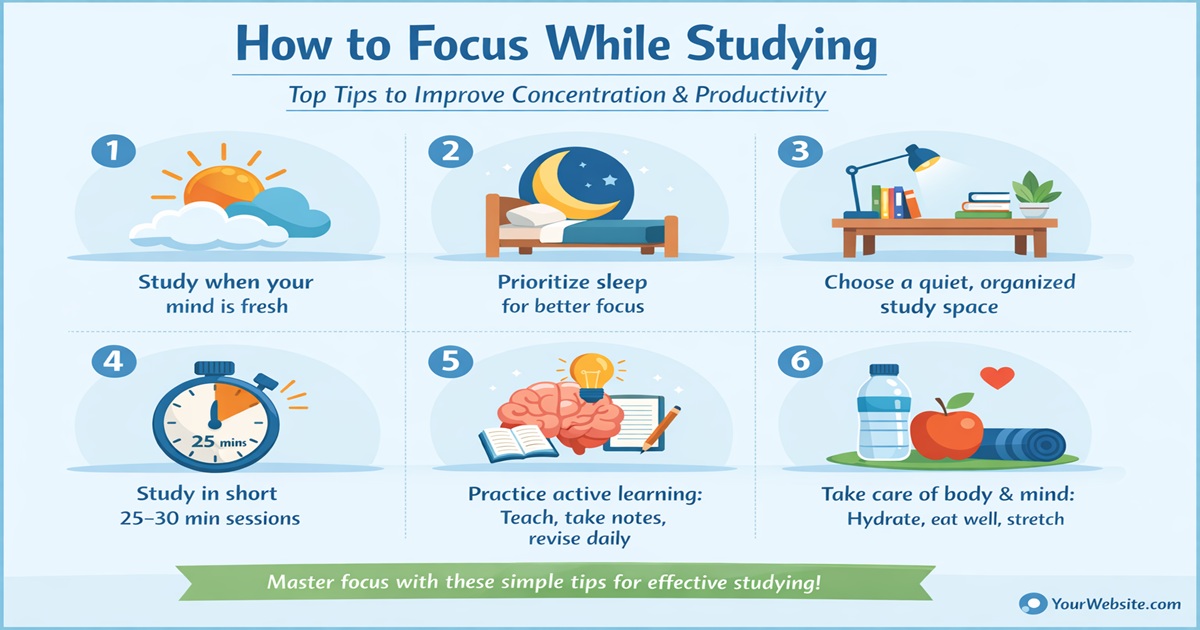
Studying effectively isn’t just about spending long hours with books. Many students struggle because their minds wander, distractions appear, or they feel overwhelmed. Learning how to focus while studying can help you manage time efficiently, understand concepts better, and reduce stress. By practicing the right habits and strategies, students can retain information more effectively, improve comprehension, and make study sessions productive and engaging. For more tools to help with learning, you can explore free online learning tools for students or check SWAYAM for government-recognized online courses.
Developing focus early helps build better learning habits and reduces frustration during exam preparation or regular study routines. These strategies teach students how to focus while studying effectively in different situations. Learning to concentrate is not just about sitting quietly—it’s about understanding your mind, managing distractions, and creating habits that make learning easier and more enjoyable.
Study When Your Mind Is Fresh
One of the most important steps in mastering concentration during study sessions is choosing the right time:
- Morning is best: Your brain is rested, clear, and ready to absorb information. Early study sessions allow students to engage fully with material. For instance, solving difficult math or science problems is often faster in the morning.
- Avoid late-night sessions: Fatigue reduces concentration, making it harder to stay attentive and retain information. Even short study marathons at night can leave you mentally exhausted.
- Refresh before studying: Short stretches, a walk, or a healthy breakfast prepares your mind for effective focus. Doing a quick mental warm-up, like reviewing flashcards or notes, can help you get into “study mode.”
- Short, focused sessions: Studying in 25–30 minute bursts keeps attention sharp. Trying to study for hours nonstop often leads to distraction and burnout.
Tip: Schedule difficult topics for the morning and lighter ones later to maximize concentration. These habits help students learn how to focus while studying more efficiently.
Sleep Early and Wake Up Early
Proper sleep directly affects your ability to focus while studying.
- Prioritize sleep: Going to bed early ensures your brain and body are rested. Sleep helps consolidate memory, making learning more effective.
- Wake up early: Morning sessions take advantage of your freshest mental state. Starting the day early also creates a consistent routine that supports long-term learning.
- Memory and focus: Adequate rest improves retention, concentration, and overall learning efficiency.
Tip: A consistent sleep schedule combined with early morning study sessions enhances your ability to concentrate and reinforces techniques for learning how to focus while studying effectively.
Create an Optimal Study Environment
Your environment is key to maintaining concentration:
- Choose a quiet, private space: Avoid open areas where movement or passersby can break focus.
- Keep your area organized: Clutter can distract attention and reduce focus. A clean desk signals your brain that it’s time to work.
- Proper lighting: Bright or natural light keeps you alert, while desk lamps help avoid glare. Poor lighting strains the eyes and reduces concentration.
- Posture matters: Sit upright at a desk rather than lying on a bed to stay attentive. Proper posture prevents fatigue and signals your body that it’s time to focus.
Tip: A dedicated study space signals your brain that it’s time to concentrate. Adding a few visual aids, such as charts or sticky notes, can also help maintain attention and make learning interactive.
Minimize Distractions
- Avoid earphones and music: Silence generally improves focus. Some instrumental sounds may help a few students, but quiet works best.
- Reduce digital interruptions: Keep your phone silent or away, close unnecessary apps, and consider focus apps if needed. Limiting social media while studying prevents frequent attention breaks.
- Inform others: Let family or roommates know your study schedule to minimize interruptions.
Tip: Minimizing distractions helps your mind engage fully with the study material.
Use Study Techniques for Better Focus
- Set clear goals: Break large tasks into smaller steps and decide what to achieve in each session. Example: “Read Chapter 1 → Take notes → Solve practice questions.”
- Study in short bursts (Pomodoro Technique): Focus for 25–30 minutes, take a 5-minute break, and a longer break after four cycles.
- Study small parts consistently: Even 20–30 minutes daily on a single topic is more effective than last-minute cramming. Consistency improves memory retention.
- Revise daily before new topics: Reviewing previous lessons strengthens retention and understanding. Even 5–10 minutes can make a big difference.
Tip: Consistency and planning reduce stress and improve concentration. These methods teach students how to focus while studying without feeling overwhelmed.
Engage Actively With Learning
- Pay attention in class: Listening carefully and taking brief notes improves comprehension later.
- Teach others: Explaining concepts reinforces understanding and highlights gaps in knowledge. You can even teach aloud to yourself or a study partner.
- Keep pen and paper nearby: Quick note-taking helps retain information. Use notebooks, flashcards, or planners for better review.
- Carry quick revision notes: Small notes for on-the-go review reinforce learning.
Tip: Active learning strategies naturally strengthen focus and memory. Incorporating mind maps or diagrams can make learning visual and engaging.
Take Care of Your Body and Mind
- Sleep well, eat balanced meals, and stay hydrated: Healthy habits support concentration. A light, healthy snack can keep energy levels stable during study sessions.
- Take short breaks to stretch or walk: Refreshes the mind and body. Even a 2–3 minute stretch every 30 minutes can improve alertness.
- Practice mindfulness: Even 5–10 minutes of deep breathing or meditation helps the mind settle and improves attention.
Tip: Physical and mental well-being directly affect your ability to focus while studying. Combining mindfulness with study breaks enhances learning efficiency.
Build Consistent Habits and Stay Motivated
- Study at the same times each day and use a dedicated study spot.
- Set realistic goals and reward yourself for achieving them. Small rewards help reinforce positive habits. To build a daily study routine, see our good study habits for students daily routine guide. Additionally, for guidance on planning your future after school, check out right career after class 10 and 12.
- Reflect on distractions and adjust routines for maximum efficiency.
Tip: Gradually refining study habits helps you concentrate naturally and consistently. Tracking progress in a planner or app also keeps motivation high.
Conclusion
Learning how to focus while studying is about choosing the right time, creating an optimal study environment, and building effective habits. Early morning sessions, quiet study spaces, proper lighting, taking notes, carrying small revision points, daily revision, avoiding distractions, active learning, mindfulness, and healthy routines all contribute to better concentration. Combined with goal-setting, short study sessions, and consistent practice, these strategies ensure study time is productive, stress-free, and effective. With patience and consistency, any student can master the skill of focusing while studying and improve learning outcomes, making study sessions more enjoyable and less stressful.
For more practical tips to improve study habits and concentration, check out our study smarter tips.
FAQs
Q1: What is the best time to study to stay focused?
A1: Early morning is usually the best time because your mind is fresh and alert. This helps students understand how to focus while studying more effectively.
Q2: Why is silence important for studying?
A2: A pin-drop silent room prevents distractions, allowing your brain to concentrate fully. Silence is key to learning how to focus efficiently.
Q3: Should I study in an open space?
A3: Avoid open areas like gardens or living rooms, where movement or passersby can break focus. A private space improves concentration.
Q4: Should I keep pen and paper nearby while studying?
A4: Yes. Writing important points immediately helps retain information and reduces distractions.
Q5: How often should I revise previous lessons?
A5: Daily revision is best. Reviewing past lessons before learning new topics strengthens memory and helps maintain concentration.
Q6: Can listening to music help focus while studying?
A6: Background music, especially with lyrics, often divides attention. Silence or very light instrumental sounds are better.
Q7: Is it okay to study while lying down?
A7: No. Studying on your bed reduces alertness. Sitting upright at a desk improves concentration.
Q8: How can teaching someone else improve focus?
A8: Teaching reinforces knowledge, identifies gaps, and strengthens concentration naturally.
Q9: Why study small parts consistently?
A9: Breaking lessons into small sections daily prevents overwhelm and improves retention.
Q10: Can mindfulness exercises help improve focus while studying?
A10: Yes. Even 5–10 minutes of deep breathing or mindfulness can calm the mind and support your ability to focus.