ICDS Meghalaya is a long-running public welfare programme focused on child health, nutrition, and early development, along with care and support for pregnant and lactating women. Delivered through Anganwadi Centres, it forms the foundation for early childhood care across both rural and urban areas of the state.
Meghalaya’s tribal population, hilly terrain, and dispersed settlements make early nutrition and maternal health services especially important. ICDS Meghalaya brings essential services closer to households, rather than relying solely on hospitals or urban health facilities.
What Is ICDS Meghalaya?
The Integrated Child Development Services (ICDS) programme in Meghalaya is a centrally sponsored scheme implemented by the Government of Meghalaya through the Social Welfare Department. It targets children from birth to six years of age, as well as pregnant and lactating women, addressing undernutrition, poor health outcomes, and lack of early learning opportunities.
ICDS Meghalaya operates nationally under the guidelines of the Ministry of Women & Child Development ICDS.
Scientific research consistently shows that the first six years of life are critical for physical growth, cognitive development, and long-term well-being. ICDS Meghalaya emphasizes early intervention and preventive care rather than waiting for health issues to arise.
Why ICDS Matters in Meghalaya
Meghalaya has a largely rural and tribal population. Many villages are located in hilly or forested regions where access to healthcare facilities is limited. ICDS Meghalaya ensures that local service points, such as Anganwadi Centres, bring essential nutrition, health monitoring, and early education directly to families.
Government health surveys highlight concerns such as low birth weight, anemia in children, and stunted growth in several districts. ICDS Meghalaya complements hospitals and primary care providers by monitoring child growth, supporting maternal health, and raising awareness about nutrition and hygiene at the community level.
Core Objectives of ICDS Meghalaya
The programme operates with clear objectives:
- Improve nutritional status of children under six years
- Support health and nutrition needs of pregnant and lactating women
- Reduce malnutrition, illness, and preventable deficiencies
- Provide early childhood education before formal schooling
- Build caregiver awareness on hygiene, nutrition, and child care
These objectives guide daily operations at Anganwadi Centres across Meghalaya.
Services Provided Under ICDS Meghalaya
ICDS Meghalaya delivers a holistic package of services:
Supplementary Nutrition
Children, pregnant women, and lactating mothers receive supplementary nutrition designed to complement regular household meals. Nutritional norms are defined nationally and adapted locally to cultural food practices. Typical items include fortified cereals, pulses, milk, and seasonal vegetables.
Health Check-Ups
Regular health assessments monitor child growth and maternal health indicators. Growth monitoring charts, weight tracking, and early illness detection ensure timely interventions.
Immunization Support
While vaccinations are led by the health department, ICDS Meghalaya supports outreach by informing families, coordinating schedules, and encouraging participation in immunization programmes.
Pre-School Education
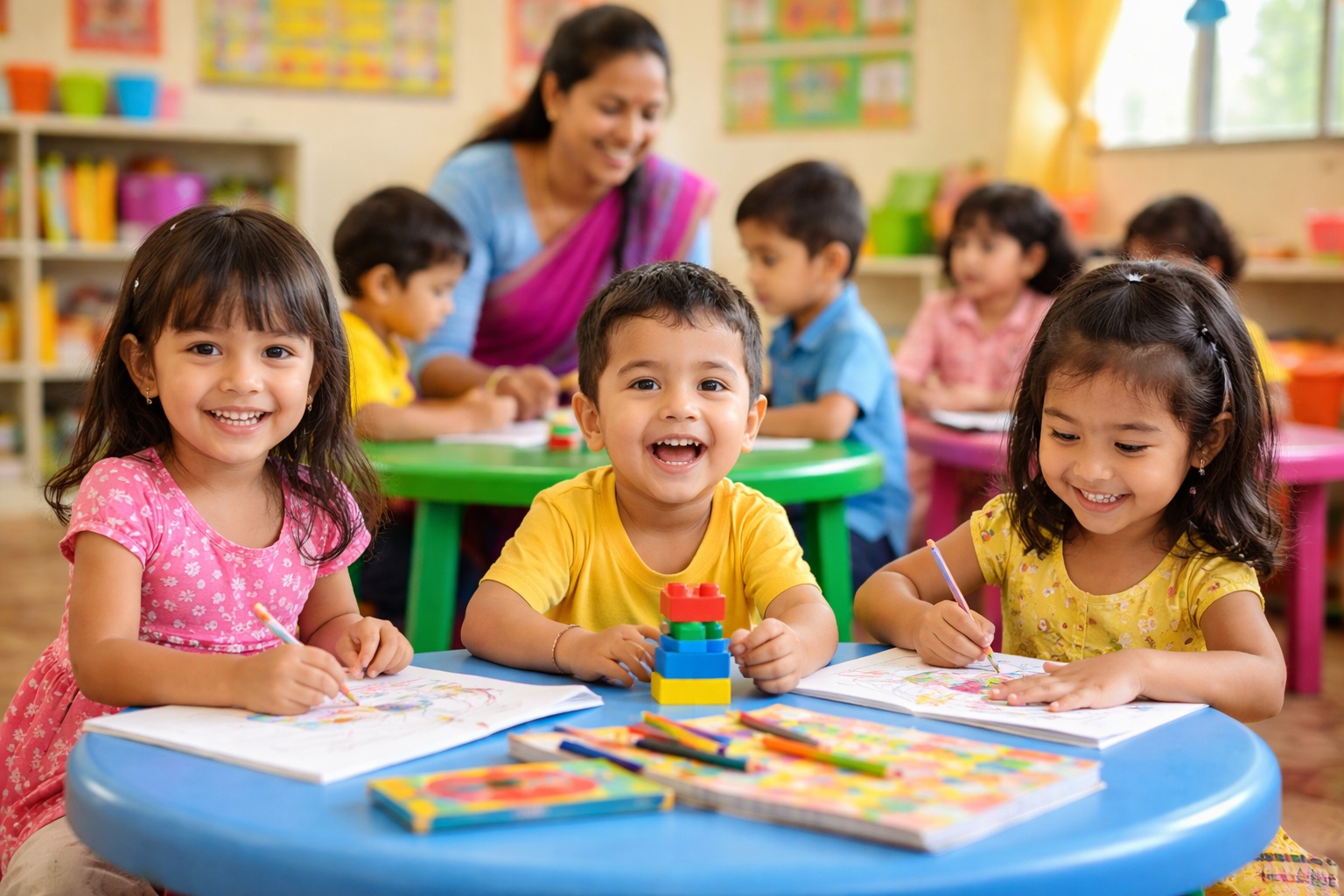
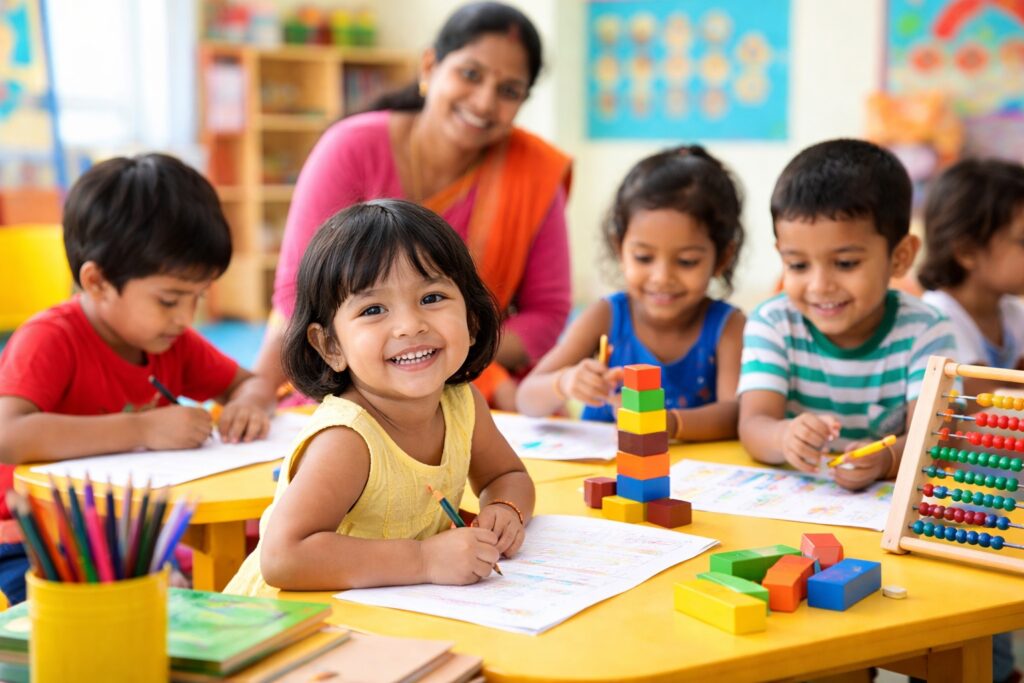
Children aged 3–6 attend informal pre-school sessions at Anganwadi Centres. Activities include basic literacy, numeracy, social skills, and play-based learning to prepare children for formal schooling.
Nutrition and Health Education
Caregivers receive training on nutrition, breastfeeding, hygiene, sanitation, and general child care practices. This helps improve household-level practices that support child development.
Anganwadi Centres: Backbone of ICDS Meghalaya
Anganwadi Centres are the primary delivery points. Staffed by trained Anganwadi Workers and Helpers, they manage records, distribute nutrition, conduct early learning activities, coordinate with health departments, and engage with families.
Effective centres build community trust, ensuring higher participation and better outcomes for children and women.
Eligibility
The scheme is accessible to:
- Children from birth to six years
- Pregnant women
- Lactating mothers
- Adolescent girls in selected programme components
Beneficiaries are identified through local surveys, health workers, and Anganwadi records, making access simple even for families with limited documentation.
Coverage Across Meghalaya
ICDS Meghalaya spans all districts, including Khasi Hills, Garo Hills, and Jaintia Hills. Special attention is given to remote and difficult-to-access areas. Urban centres address challenges such as migrant populations, while rural centres focus on nutrition security and early education.
According to the latest government reports, Meghalaya has over 2,000 operational Anganwadi Centres, serving tens of thousands of children and women across the state.
Funding and Administration
The programme is jointly funded by central and state governments. Administrative responsibility in Meghalaya lies with the Social Welfare Department, which manages planning, staffing, monitoring, and coordination with health and education departments. Regular audits and reports ensure transparency and track nutrition distribution and service delivery.
Monitoring and Data Management
ICDS Meghalaya increasingly uses digital tools to track attendance, nutrition supply, and child growth indicators. Data collected at the Anganwadi level helps plan improvements and identify gaps at block and district levels. Community involvement, including village councils, adds an extra layer of accountability.
Role in Early Childhood Development
Early childhood development includes physical, cognitive, emotional, and social growth. Integrated Child Development Services (ICDS) in Meghalaya supports these areas through structured activities, play-based learning, and routine engagement at Anganwadi Centres.
Children who regularly participate often adapt more easily to formal schooling. The programme aligns with global best practices for Early Childhood Development in India.
Integration With Other Welfare Programmes
Integrated Child Development Services (ICDS) in Meghalaya works alongside multiple state and central schemes. For a wider perspective on complementary programmes, see Meghalaya government schemes.
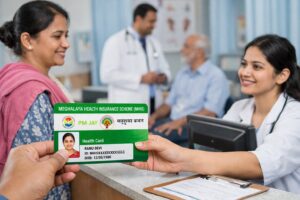
Families may also benefit from the Meghalaya Health Insurance Scheme, which provides healthcare coverage beyond primary care.
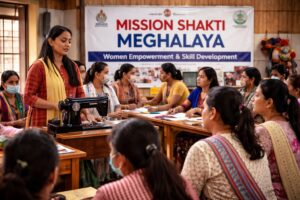
Other relevant initiatives include Mission Shakti Meghalaya, PMAY-G, and MGNREGA, which together improve household security, women empowerment, and overall child welfare.
Challenges in Implementation
- Difficult terrain affecting supply delivery
- Infrastructure limitations in older Anganwadi buildings
- Staff workload in high-population areas
- Seasonal access issues during heavy rainfall
Continuous local adaptation is essential to maintain service delivery quality.
Community Participation and Awareness
Community involvement is crucial for programme success. Awareness sessions, home visits, and engagement with local councils encourage families to utilize services effectively. Educated caregivers contribute to improved child nutrition, health, and learning outcomes.
District-Level Examples and Statistics
- Khasi Hills: Approximately 700 Anganwadi Centres serve children in remote villages with limited healthcare access.
- Garo Hills: Focus on nutritional support and immunization coverage in tribal communities.
- Jaintia Hills: Integration with pre-school education and adolescent girl programmes has shown improved literacy readiness.
Over 90% of eligible children and women in operational centres receive some form of supplementary nutrition or early learning support.
Long-Term Relevance
ICDS in Meghalaya addresses foundational issues affecting education, nutrition, and public health. By focusing on prevention, early intervention, and local access, the programme strengthens the long-term well-being of children and women across the state.
ICDS in Meghalaya is a cornerstone public welfare programme that ensures children and women receive essential nutrition, health monitoring, and early education. Its integration with other welfare initiatives and alignment with global early childhood development practices make it vital for Meghalaya’s social welfare landscape.
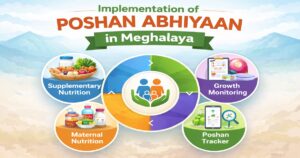
“For readers interested in a detailed view of how POSHAN Abhiyaan is executed across Meghalaya, including coordination with Anganwadi centres under ICDS and community nutrition programs, see our full article on Implementation of POSHAN Abhiyaan in Meghalaya.”
FAQs About ICDS Meghalaya
Q: Who is eligible for ICDS Meghalaya? A: Children below six years, pregnant and lactating women, and adolescent girls in selected components.
Q: How are beneficiaries identified? A: Through local surveys, Anganwadi records, and health worker referrals.
Q: Does ICDS replace hospitals? A: No, it complements healthcare services by focusing on early monitoring and prevention.
Q: What services are provided? A: Supplementary nutrition, health check-ups, immunization support, pre-school education, and caregiver training.