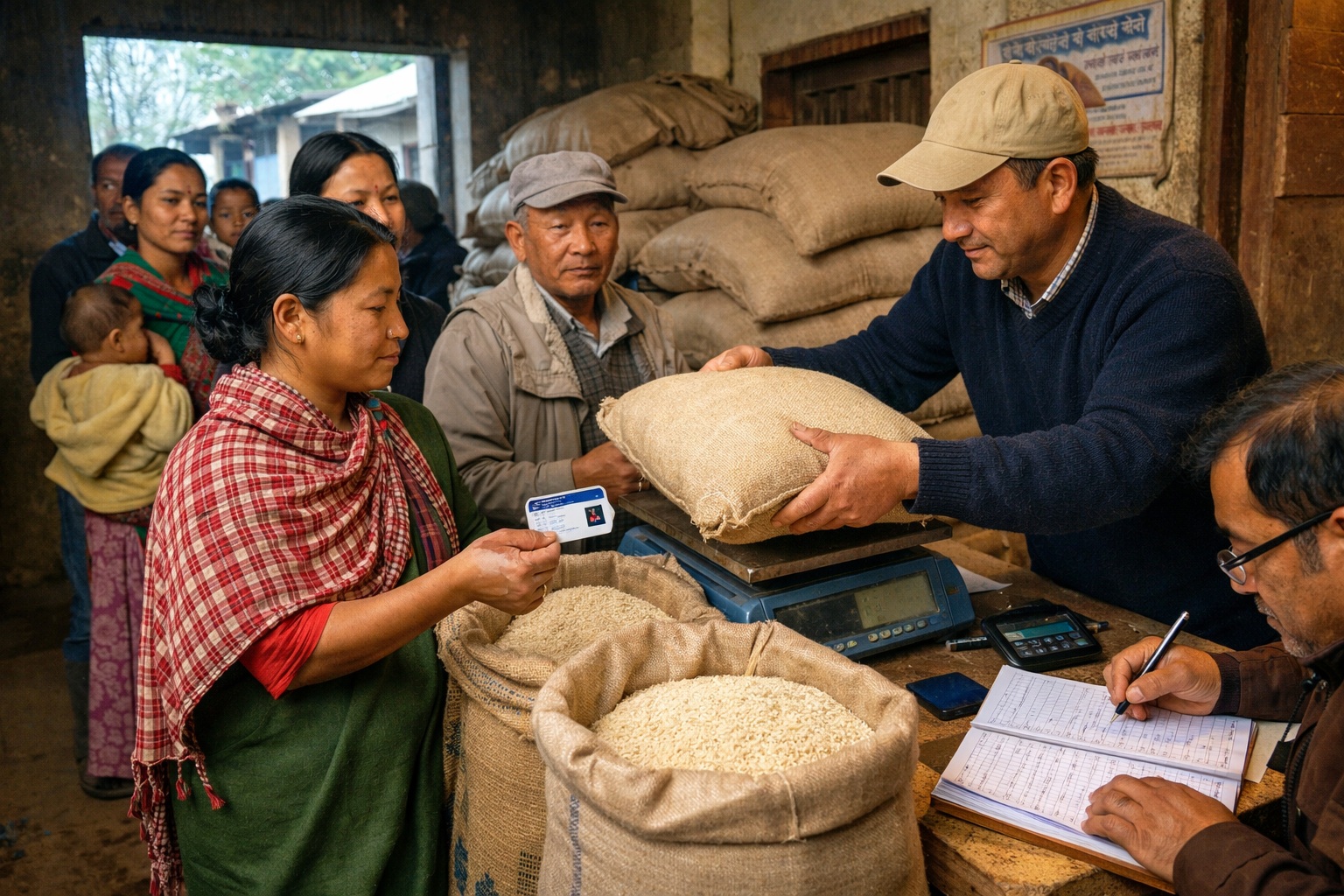
The Meghalaya Public Distribution Scheme (PDS) is one of the most important welfare initiatives in the state, providing subsidized essential food grains to eligible households across Meghalaya, including Garo Hills, Khasi Hills, Jaintia Hills, Tura, and other towns and villages. This program ensures food security for low-income families, reduces financial burden, and strengthens community welfare across all districts.
Residents in remote areas of Meghalaya, such as villages in Garo Hills and Jaintia Hills, heavily rely on the Meghalaya Public Distribution Scheme because local markets may be limited or inaccessible. Families benefit not only from affordable food grains but also from the health and educational improvements this support enables.
Key Benefits of Meghalaya Public Distribution Scheme
The state food support program in Meghalaya provides multiple advantages:
- Subsidized Food Grains – Rice, wheat, sugar, and kerosene are supplied at reduced prices to help families manage household expenses.
- Support for BPL Families – Below Poverty Line households receive maximum priority for monthly allocations.
- Nutritional Security – Ensures children, elderly, and vulnerable members get essential nutrition.
- Wide Coverage – Extends benefits to households across all districts of Meghalaya.
- Digital Access & Monitoring – E-ration cards and mobile apps help track allocations and report shortages.
- Women Empowerment – Subsidized grains reduce financial pressure on women managing household budgets.
- Education Support – Better nutrition for children supports learning and academic performance.
By providing these benefits, the Meghalaya Public Distribution Scheme strengthens household stability and overall community welfare.
Eligibility Criteria and Ration Card Types
To access the scheme, residents must:
- Be a permanent resident of Meghalaya.
- Hold a valid ration card issued by local authorities.
- Ensure priority for BPL households, while some APL families may also receive certain commodities.
- Maintain updated family and income records.
Meghalaya issues several types of ration cards:
- BPL Cards – Maximum subsidy for below poverty line families.
- APL Cards – Moderate subsidy for above poverty line households.
- Antyodaya Cards – For the poorest of the poor.
Monthly quotas for rice, wheat, sugar, and kerosene vary by family size and district.
How to Apply for Meghalaya Public Distribution Scheme
Applications can be submitted at the local PDS office or Block Development Office with:
- Proof of residence
- Ration card
- Income certificate (if applicable)
District-specific procedures apply for new applications or renewals. Official updates are available on the Meghalaya State Food & Civil Supplies Department website.
For more tips on managing government schemes, you can also read our guide on PMAY-G Meghalaya Scheme.
Modernization & Digital Initiatives
The Meghalaya PDS has introduced digital solutions for better access:
- E-ration cards for easy tracking
- Online portals to check ration shop schedules and balances
- Mobile notifications to report shortages and ensure transparency
These improvements make the Meghalaya Public Distribution Scheme more efficient and reliable for residents statewide. Families can also refer to Best Free Online Learning Tools for Students to plan educational activities while saving on food expenses.
Tips and Common Mistakes to Avoid
- Check ration shop schedules monthly
- Keep collection receipts
- Report shortages promptly
- Update family and income records regularly
Avoid delays in card renewal or submitting incomplete documents, which can disrupt access to benefits.
Impact on Families, Women, and Students
The Meghalaya Public Distribution Scheme supports families in multiple ways:
- Saves money for education and household needs
- Reduces financial burden on women managing budgets
- Provides children with better nutrition for improved learning
- Supports residents in remote districts with limited market access
Future of Food Security in Meghalaya
With ongoing digitalization and monitoring, this Scheme is expected to expand coverage and improve efficiency. Transparent allocation and consistent monitoring build trust among residents, strengthening community welfare programs statewide.
Residents can also explore educational and skill-building opportunities on Khan Academy and SWAYAM to complement family support with learning initiatives.
The Meghalaya Public Distribution Scheme is a cornerstone of state welfare, providing affordable food grains to households across Meghalaya. Residents should ensure they are registered, updated, and aware of application procedures. By supporting household food security, the scheme promotes healthy families, better education, and stronger communities.
The Meghalaya Public Distribution Scheme is one of several welfare initiatives implemented by the state — explore other important Meghalaya government schemes that support citizens across different sectors